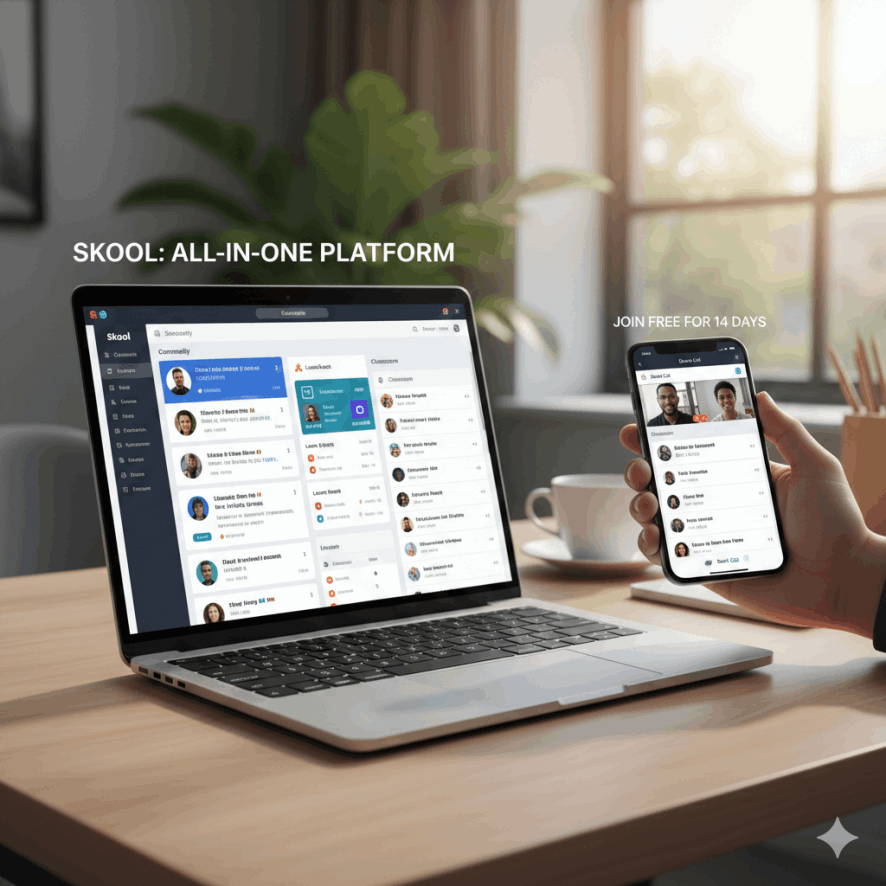
Skool is an all-in-one community platform built to replace the fragmented "tech stack" used by modern creators.
By integrating a discussion forum with a digital classroom, it provides a seamless alternative to juggling tools like Facebook Groups and Teachable.
Founded by Sam Ovens, Skool transitioned into a global powerhouse in early 2024 after entrepreneur Alex Hormozi became a lead investor and co-owner.
Skool is an all-in-one engagement hub that replaces fragmented tech stacks by unifying private communities, digital courses, and event calendars into a single, distraction-free dashboard.
Built for the modern creator economy, it eliminates the friction of switching between tools like Facebook Groups and Teachable.
Skool is best known for its "Community-First" gamification, which uses leaderboards and points to turn passive students into active contributors, rewarding engagement with unlocked content and status.
Skool streamlines your business by unifying your community, curriculum, and schedule into a single, high-engagement dashboard. Here is how it works:
The Community Feed: A distraction-free, ad-free space for members to interact. It offers the familiar feel of a private group without the noise of social media.
The Digital Classroom: Host your video modules and resources directly on the platform. Members can learn and discuss lessons in one seamless flow.
The Smart Calendar: No more "What time is the call?" All events and live sessions automatically sync to each member’s local time zone.
Built-in Gamification: Drive organic engagement through a "Like-to-Level" system. When members contribute valuable content, they earn points and level up, allowing you to automatically unlock bonus rewards or secret courses.
Unified Access: Members use a single login and mobile app to toggle between all their free and paid Skool communities, creating a frictionless user experience.
Skool is a hybrid platform that refuses to choose between the two. While traditional software usually picks a side, Skool is designed to be a unified "Community-Course" ecosystem.
The best way to describe it is as a community-led education platform. Unlike older platforms that treat the community as an afterthought or a "comment section," Skool makes the social interaction the heart of the experience, with the courses acting as supporting resources.
It is a Community Platform because:
It functions like a private social network. It replaces tools like Facebook Groups or Discord by providing a dedicated "Community" tab where members can share posts, ask questions, and interact in a distraction-free environment. Its most famous feature is the gamification system, which rewards members with points and higher levels for being active and helpful.
It is a Course Platform because:
It features a dedicated "Classroom" tab where creators can host their video modules, worksheets, and digital resources. It allows for "drip-feeding" content (releasing lessons over time) and even "locked" content that members can only access once they’ve reached a certain level of community engagement.
The Hybrid Advantage
The "magic" of Skool happens when these two worlds collide. Instead of having a student buy a course on one site and then forget to log in, Skool pulls them back in through the community feed. By putting the Community, the Classroom, and the Calendar under one single login, it ensures that learning is social rather than isolated.
In short: Skool is a community where the curriculum lives, rather than a course that happens to have a chat box.
Unlock everything inside—from our premium digital classroom to our private community and live coaching—for 14 days at no cost.
We believe in the value of this platform, but the choice is yours. If it’s not the right fit, simply cancel before your 14 days are up and you won't be charged a cent.
It’s a simple, hassle-free way to test the waters with complete peace of mind.
✅One Dashboard, Zero Chaos: Replace your messy tech stack. Community, Classroom, and Calendar are now integrated into one spot—no more lost links or confused members.
✅Gamified Retention: Let the platform do the work for you. Members earn status and unlock content by staying active, turning your community into a game they actually want to play.
✅The "No-Noise" Zone: Give your community the professional home it deserves. No ads, no political rants, and no cat videos—just your content and your people.
✅Direct Audience Ownership: You own the connection. Send one-click email broadcasts to your entire list and bypass the algorithms that usually hide your posts.
✅Mastered in Minutes: Built for simplicity. Your members won't need a tutorial to navigate your world, leading to higher satisfaction and zero "tech" headaches.
Skool unifies your community, courses, and schedule into one distraction-free hub, allowing you to focus on your members rather than your tech stack.
✅Community Feed: An ad-free, organized forum for high-level networking.
✅Integrated Classroom: Host courses and modules where the conversation happens.
✅Automated Gamification: Points and leaderboards that reward active participation.
✅Smart Calendar: A central schedule that auto-syncs to every member’s time zone.
✅Email Broadcasts: Reach every member’s inbox instantly with one click.
When choosing a platform in 2025, the decision usually comes down to whether you want to focus on marketing automation or member engagement. Here is how Skool compares to the other major players in a text-only format.
1️⃣Skool vs. Kajabi
The main difference is that Kajabi is a marketing-first platform, while Skool is a community-first platform.
Kajabi is an "all-in-one" business builder. It includes a website builder, advanced sales funnels, and complex email automation. However, because it tries to do everything, its community feature often feels "cold" and separate from the courses.
Skool, by contrast, is a focused engagement hub. It doesn't have a website builder or email marketing tools (you'll need separate tools like WordPress or ConvertKit), but its engagement rates are significantly higher. It puts the community at the center, so students actually talk to each other and finish their courses.
2️⃣Skool vs. Teachable
Teachable is essentially a digital library for your videos. It is excellent for "static" learning where students watch a course in private, receive a certificate, and leave. It offers better student analytics and quiz features than Skool.
Skool is a "living" classroom. It assumes that the real value of your program comes from the interaction between students. If you want a traditional "hands-off" school, Teachable is better. If you want a coaching program or a mastermind where people "level up" together, Skool is the standard.
3️⃣Skool vs. Circle
Circle is the professional, "white-label" alternative. It allows you to customize the branding completely so it looks like your own website. It offers more complex organization, like different "spaces" for different topics, and has native live-streaming built in.
Skool is built for simplicity and speed. While Circle can feel overwhelming or "corporate," Skool feels like a simplified social network. Skool’s gamification (leaderboards and points) is also more deeply integrated into the core experience than Circle’s version.
4️⃣Skool vs. Discord
Discord is built for real-time hype and fast-paced chat. It is great for 24/7 interaction, but it is notoriously difficult to organize course content or long-form discussions. It is easy for important information to get "buried" in the chat history.
Skool is built for organized growth. It replaces the "chaotic chat" of Discord with an organized forum feed. This makes it much easier for new members to find old lessons, search for answers, and navigate your curriculum without feeling overwhelmed.
Yes, you can host courses on Skool via the Classroom tab, which integrates lessons directly with your community.
It allows you to organize content into folders and modules, supporting native video hosting, file attachments, and drip-feed scheduling.
A unique advantage is its gamification system, where you can set courses to unlock automatically as members engage and "level up" in the group. While it lacks advanced features like built-in quizzes or certificates, its simplicity makes it highly effective for increasing student completion rates.
Yes, Skool is worth the price if you want a high-engagement community that runs itself. It replaces the need for separate course hosting, forums, and calendars, saving you money and technical headaches. Its built-in gamification significantly boosts member retention, making the subscription pay for itself through lower cancellation rates.
While the $99/month Pro Plan is the standard for scaling, the $9/month Hobby Plan makes it accessible for beginners to test ideas with low risk. Overall, for creators who want an active, loyal "tribe," Skool remains the most profitable and user-friendly choice available today.
In 2025, Skool introduced a tiered pricing model to support both new and established creators. Here is the short breakdown:
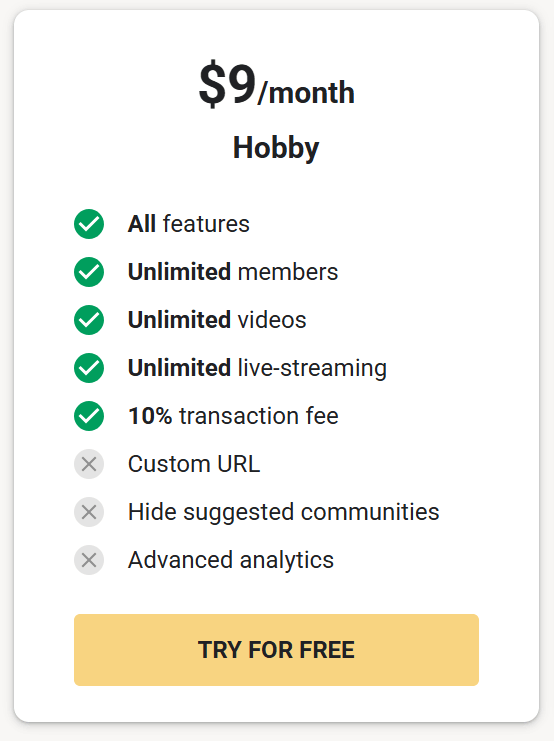
1. Hobby Plan | $9/month
Best for: Beginners and community testing.
Core Access: Unlimited members, courses, and native live streaming.
Hosting: Includes 30GB of native video storage and full gamification tools.
Trade-offs: 10% transaction fee on sales and no custom domain support.
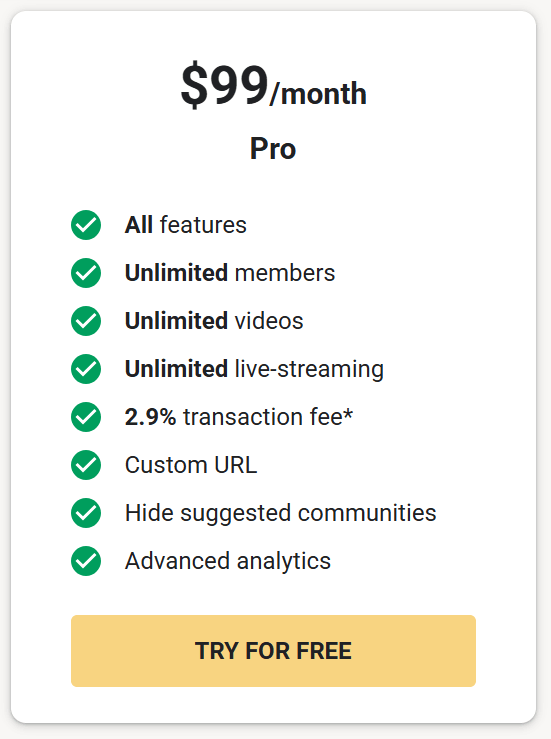
2. Pro Plan | $99/month
Best for: Established businesses and scaling.
Financials: Transaction fees drop to 2.9% (standard Stripe rates).
Branding: Supports custom domains and white-labeling (hiding suggested groups).
Data: Includes advanced engagement and revenue analytics.
Yes, Skool is excellent for community building if you value engagement and simplicity over complex features.
Gamification: Members earn points and levels for posting and liking, which keeps the group active and fun.
All-in-One: It combines your discussion feed, courses, and event calendar in a single, clean interface.
Low Friction: There are no ads or distractions, and the mobile app is very user-friendly.
The Trade-offs:
Less Customization: You can't change the layout or branding much.
Simple Structure: Everything happens in one main feed, so you can't create multiple "channels" like on Discord.
Yes. Skool now offers native video hosting. You can upload high-definition videos directly to your lessons. You also have the option to embed videos from external links like YouTube, Vimeo, Loom, or Wistia if you prefer.
Yes. You can manage both in one group. You can set specific courses to be "Private" (requiring manual or paid access) while keeping the community feed open for free members. You can also sell courses as one-time "Buy Now" purchases directly inside the platform.
No. A single Skool group allows for unlimited courses and unlimited members. You only pay the flat monthly fee ($99/mo for the Pro plan) regardless of how many modules or students you add.
This is Skool’s unique gamification. You can set a course to unlock only when a member reaches a certain Level (e.g., Level 3). Members gain points and level up by receiving "Likes" on their posts and comments within the community, which encourages them to be active and helpful.
Yes. One of Skool’s biggest perks is that they act as the Merchant of Record. This means Skool automatically calculates, collects, and remits VAT/sales tax for you globally, saving you from a major administrative headache.
Not natively. Skool focuses on simplicity and high engagement, so it currently lacks built-in quiz builders or automated certificate generation. Most creators use third-party tools (like Typeform or Canva) and link to them within the lesson if these features are required.
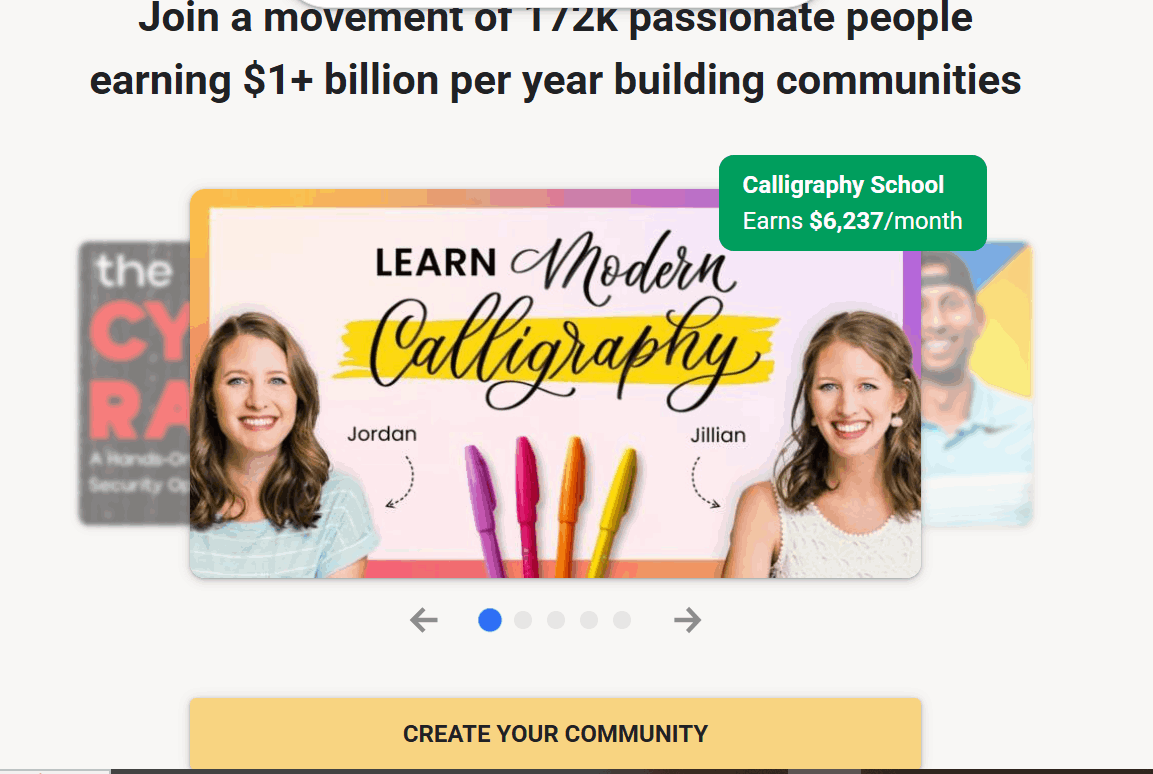
Once you have clicked the "Create Your Community" button that is right below this test, you will be taken to the secure checkout page. Simply input your details and you will be granted quick access to the 14-day FREE trial of Skool.
If you're not completely satisfied with Skool within 14-days of joining it, you can cancel the subscription for FREE. ZenCortex within 60-days of receiving it, you can request a refund by emailing the address provided with the product. We will promptly issue a full refund with no questions asked.
Take advantage of this special deal and grab Skool at special price:
The Hobby Plan ($9): Perfect for passion projects, validation phases, or small groups. Since the transaction fee is high (10%), it’s best when you are just starting and don't want the $100 overhead.
The Pro Plan ($99): Once your community is earning over $1,200/month, the savings on transaction fees (dropping from 10% to 2.9%) will actually pay for the $99 subscription itself.
🎁 The Free Trial
Skool still offers a 14-day free trial. You can start on either the $9 or $99 plan and switch between them at any time during the trial.
⏳ Don’t Wait! 14-Day FREE Trial is selling out fast—secure your FREE trial today before it’s gone!
Today Only: 14-Day FREE trial
The information provided on this website is for educational and informational purposes only and is not intended as business, legal, financial, or professional advice.
While we aim to share accurate and up-to-date insights about online communities, course platforms, and digital business tools, results may vary depending on individual skills, experience, effort, and market conditions. No guarantees of income, growth, or success are made or implied.
Any strategies, tools, or platforms mentioned — including Skool — should be evaluated independently. We encourage you to do your own research and consider your personal goals before making any purchasing decisions.
Affiliate Disclosure
This website may contain affiliate links. This means we may earn a commission if you choose to sign up or make a purchase through these links, at no additional cost to you.
We only recommend platforms and tools that we believe can genuinely add value to creators, coaches, and entrepreneurs. However, our opinions are based on personal experience, research, and professional judgment and are provided on an “AS IS” and “AS AVAILABLE” basis.
Using an affiliate link does not imply endorsement, approval, or sponsorship by the platform unless explicitly stated.
Platform Responsibility Notice
Skool is an independent software platform. Any features, pricing, policies, or availability are subject to change by the platform owner at any time. We do not control, operate, or manage Skool or its services.
Any questions related to billing, platform features, refunds, or technical support should be directed directly to Skool’s official support channels.
Final Note
By using this website, you agree that the site owner is not responsible for any outcomes, decisions, or actions you take based on the information provided here.
Always evaluate tools and platforms based on your own needs, risk tolerance, and business goals.